


If you’ve been hearing more buzz about “alts” or alternative investments lately, you’re not alone. These investments are becoming more accessible, and more popular, among high-net-worth and ultra-high-net-worth investors looking for new ways to diversify their portfolios.
But what exactly are alternative investments? How do they work, and are they right for you?
Let’s break it down.
What Are Alternative Investments?
At a basic level, alternative investments are anything outside of the traditional stock and bond markets. Think of it like this:
- Public investments include things like:
- Stocks (Apple, Amazon, Meta, Tesla)
- Bonds (U.S. Treasuries, corporate bonds, municipal bonds)
- Public real estate (REITs)
- Private investments, on the other hand, include:
- Private equity (ownership in private companies)
- Private credit (loans made to private businesses)
- Private real estate (direct ownership of rental, non-traded REITs, or commercial property)
- Private infrastructure (transportation, power generation, and data centers)
- Your own business
These private opportunities can offer exposure to different parts of the economy with returns that don’t always move in sync with public stock and bond markets.
Why Are Investors Paying More Attention to Private Markets?
One reason is simple: the pool of publicly traded companies has shrunk dramatically.
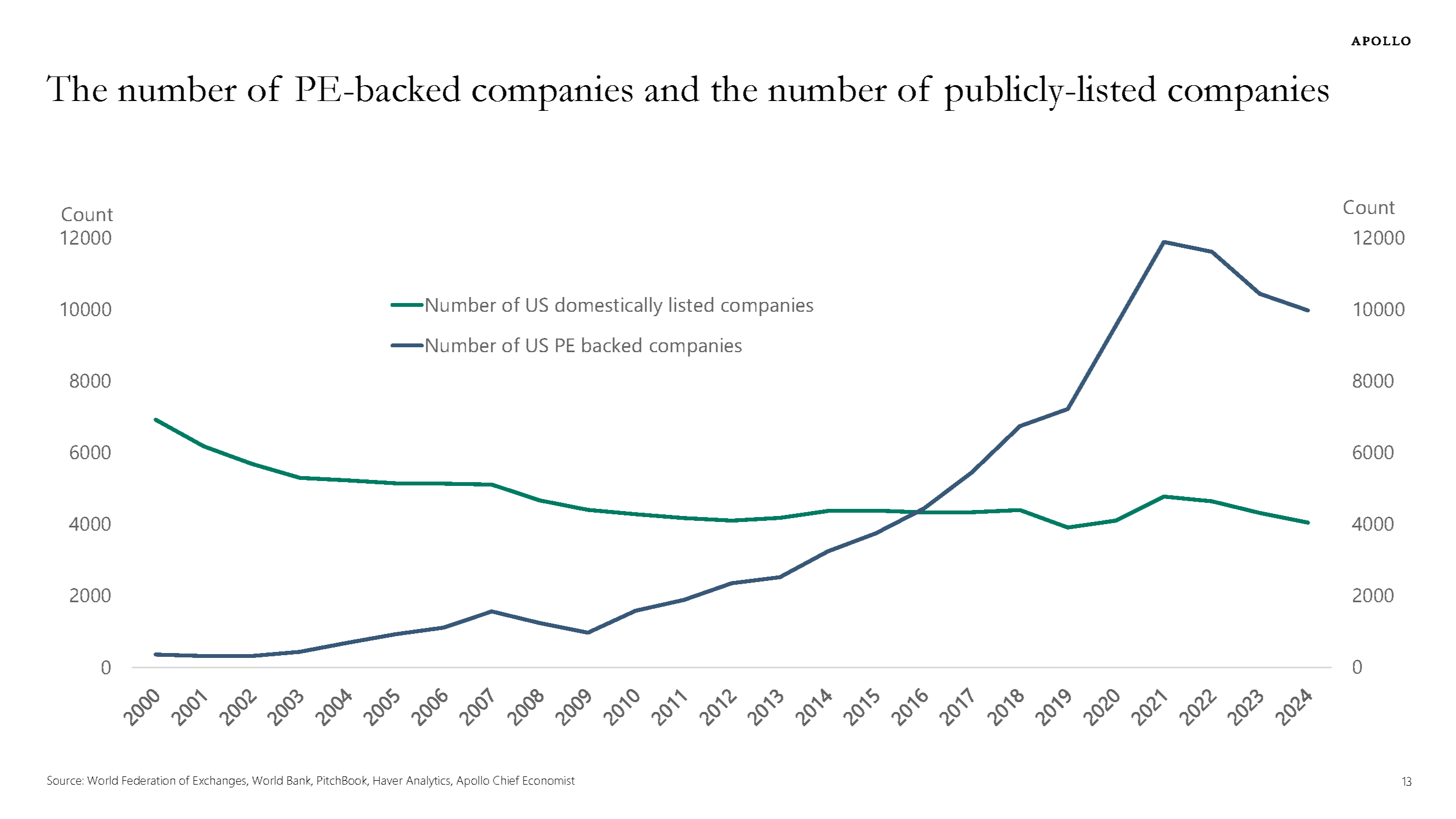
A couple decades ago, there were nearly 8,000 publicly traded U.S. companies. Today, that number is closer to 4,000. Why? Many companies are staying private longer, avoiding the regulatory burden of going public, because they can now raise money from large pools of private capital.
In the past, a company would go public (through an IPO) to raise money for growth. Today, private equity firms like Bain Capital, KKR, or Apollo can step in and provide that capital long before a company ever hits the stock market.
In fact, around 87% of companies with $100 million or more in revenue are now private.
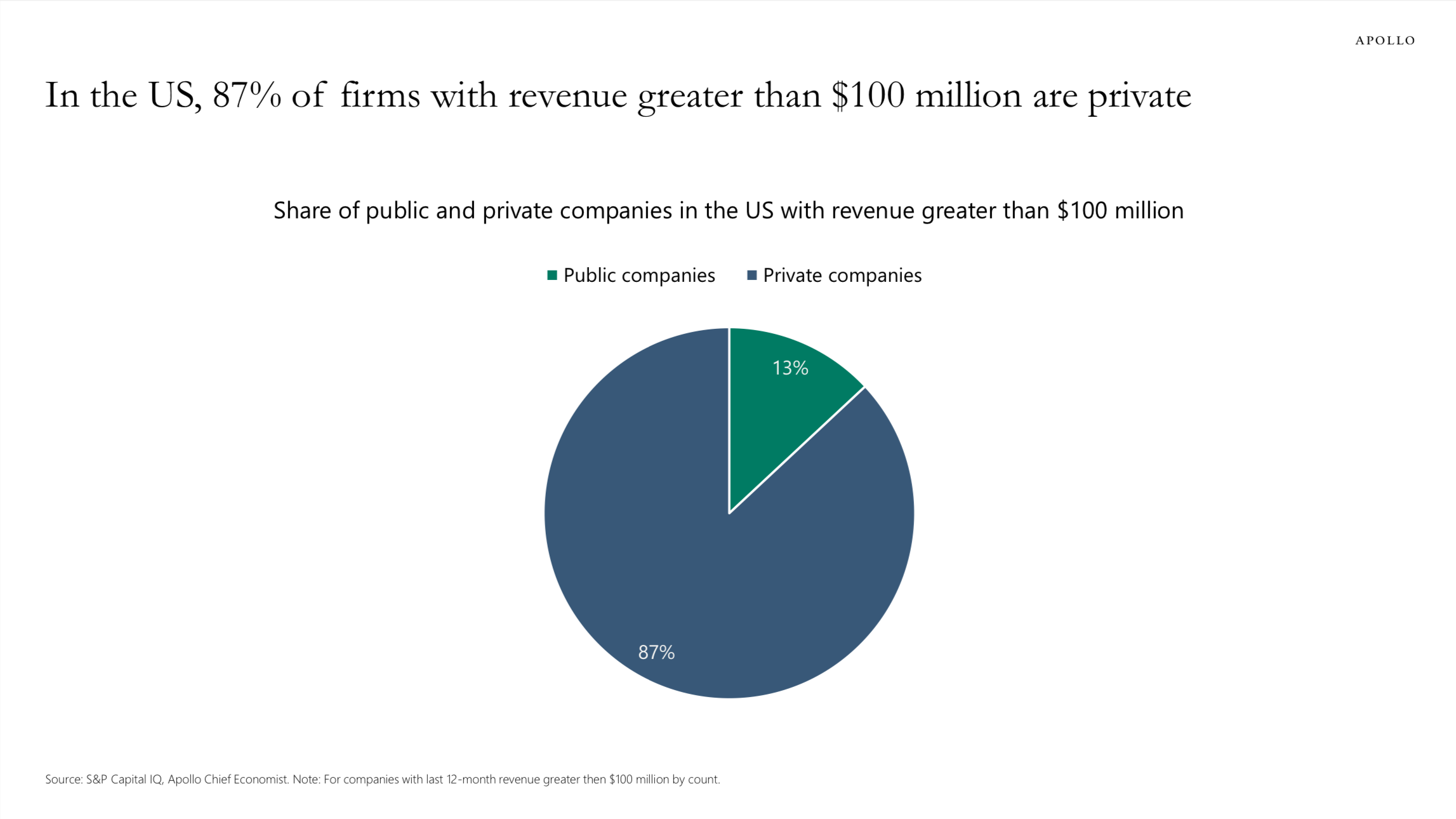
This means a growing share of investment opportunity exists in the private markets and investors want access.
Private Equity and Private Credit: Two Big Areas of Growth
Two of the most talked-about areas in the alt space are private equity and private credit.
- Private Equity gives investors the chance to own a piece of private businesses, often with the goal of helping them grow, improve operations, and eventually exit at a higher value.
- Private Credit is essentially lending money to private companies that don’t have access to the traditional bond market or would like faster speed of execution. This market has exploded in recent years as demand for capital has grown.
What Are the Potential Benefits of Alternative Investments?
Alternative investments can offer:
- Higher return potential (especially in exchange for locking up your money for a while)
- Diversification (they may perform differently than stocks or bonds)
- Access to opportunities that aren’t available on public exchanges
But like everything in investing there are trade-offs.
Important Considerations and Risks
Before diving into alts, it’s important to understand:
- Illiquidity: You might not be able to sell when you want to. Most alternatives have a lock-up period - some for years, some have quarterly or semi-annual liquidity.
- Less transparency: Many of these investments aren’t subject to the same disclosure rules as public markets.
- Higher complexity: Many alternative investments require more research and due diligence.
- Higher fees: Management and performance fees for alternatives can be significantly higher than traditional investments.
Our Approach at Boyd Wealth Management
Public markets remain the foundation of every well-diversified portfolio. The U.S. stock and bond markets - representing approximately $49 trillion and $55.3 trillion respectively1 - are the largest, most liquid, and most regulated in the world. That scale, efficiency, and transparency make them a core part of how we help clients build and protect their wealth.
At the same time, a growing number of opportunities now exist outside of traditional markets. Private markets have grown to $14.5 trillion2, offering access to investments in private equity, private credit, real estate, and infrastructure that were once reserved for institutions.
At Boyd Wealth Management, we have access to incredibly attractive alternative investment strategies. We carefully vet opportunities, look for institutional-quality access, and evaluate whether an alternative investment meets your risk profile, goals, and liquidity needs.
Not every investor needs alternative investments in their portfolio. But for the right investor, in the right context, they can play a powerful role.
Curious whether alternative investments might be a fit for you?
We’d be happy to have a conversation about your goals and whether adding alternatives to your portfolio makes sense.
Happy planning,
Brian
Sources/further reading:
1. SIFMA 2024 Capital Markets Factbook, data as of 12/31/2024
2. Apollo Chief Economist, BIS, Pitchbook, data as of 2024Q1.